Extension Publications
Research-based Extension publications translating erosion, sediment, stormwater, soil, and water quality science into practical guidance.
Browse Extension publications by topic to find research-based guidance on erosion prevention, sediment control, and turbidity management.


Erosion Prevention & Surface Stabilization
Mulch Options for Erosion Control on Construction Sites
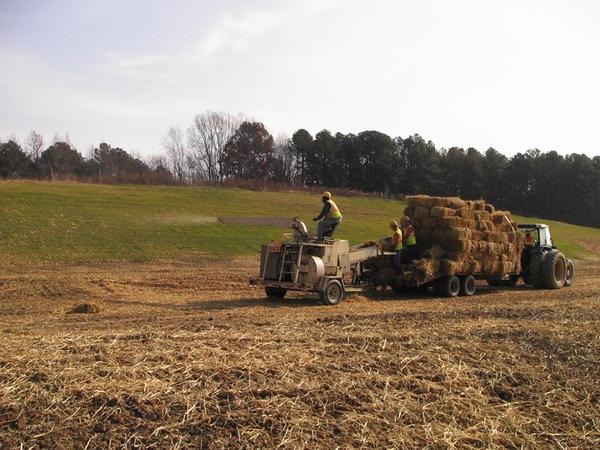
This publication discusses important characteristics, application rates, costs, and appropriate use of loose mulch, erosion control blankets, and hydraulically applied mulches as erosion control measures on construction sites.
Replacing Asphalt: Recommendations for Straw Tackifiers

There are a number of viable alternatives to asphalt for tackifying straw to hold it in place as an erosion control measure on construction sites. This publication reviews these alternatives and makes recommendations based on effectiveness, cost, and application.
Sediment Control & Basin Performance
Using Baffles to Improve Sediment Basins

Runoff on construction sites often contains large amount of soil and trapping it before it leaves the site is critical in preventing damage to streams, rivers and lakes. This factsheet describes sediment traps and basins at construction sites and agricultural operations, which provide temporary pools for runoff that allow sediment to settle before the water is discharged into water.
Fiber Check Dams and Polyacrylamide for Water Quality Improvement

This publication discusses the construction of fiber check dams on construction sites to control sediment and runoff from the site. To save money and reduce construction site impacts on nearby surface waters, how to install fiber check dams, spacing of the dams and maintenance of the dams are covered in this factsheet.
Surface Outlets for Sediment Basins

Sediment basins are temporary stormwater pools that catch runoff so it can deposit some of its sediment. The typical outlet is either a rock dam or a perforated riser barrel, both of which allow water to leave the basin from all depths. One way to improve the sediment capture rate is to use an outlet that dewaters the basin from the top of the water column where the water is cleanest. This publication describes the Faircloth skimmer, flashboard risers and other outlet configurations that accomplish this goal.
Turbidity & Chemical Treatment
Using Polyacrylamide (PAM) to Reduce Erosion on Construction Sites

This factsheet covers the use of polyacrylamides as a means of erosion control on construction sites. PAM characteristics and considerations are discussed as well as basic directions for use.
Chemical Turbidity Control in Pumped Construction Site Water

This publication describes methods to reduce turbidity and suspended solids in water being pumped into stilling basins or sediment bags, usually on construction sites where dewatering is needed.
Chemical Treatment to Control Turbidity on Construction Sites
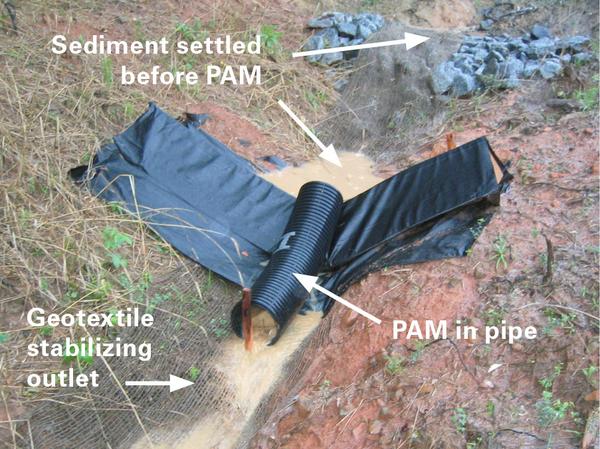
Construction sites of more than one acre are required to install systems to retain sediment produced onsite. This factsheet describes several chemical treatment options, including polyacrylamides (PAM), gypsum and alum, for reducing turbidity in impounded water.